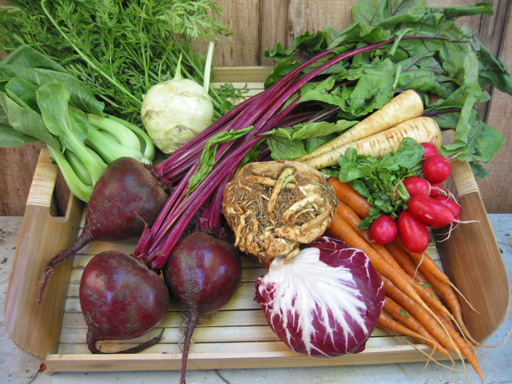
 Between the winter cold and the holiday cheer, there are many reasons to enjoy eating more than usual during this time of the year. Sweet potatoes, mushroom soup, baked granny smith apples, stuffed squash: these warm, comfort foods come to mind when I think of bundling up indoors and slipping into the semi-hibernation mode of winter.
So, I must say that it surprises me when in line at the grocery store I see people loading the conveyor belt with pineapples, blueberries, strawberries, tomatoes, grapes, avocados - the list goes on. I may live in California, the bread basket of the nation, but that doesn't mean that we have a season-free agricultural cycle. Obviously these foods have been grown in another part of the world.
Why does this matter? There are many reasons - economic and environmental being the biggest. When we are buying from overseas, or even out of state, we put economic strains on local farmers causing them to go out of business. Their farms are usually bought by monocropping, mega-agricultural companies, or by developers who turn our precious, fertile lands into suburban strip malls and cookie-cutter home developments. On the environmental tip, buying food from far away lands results in the use of more energy to transport the food than the food item even provides in caloric energy. According the the book 50 Facts that Should Change the World, “A kiwi fruit flown from New Zealand to Britain emits five times its own weight in greenhouse gases.” Besides these compelling reasons, just on taste alone as a deciding factor, a freshly picked tomato in the height of it's season in the summer is so much yummier than a tomato that's been shipped from halfway across the globe and has, thus, been breed for a long shelf life rather than it's texture and flavor.
How can you tell if something is in season or local? It was easy when I was a kid. My mom would never buy strawberries in the winter because they were too expensive. Today, it's not as easy to base local versus imported on price since many countries flood the U.S. markets with cheap foods. For example, the nation's largest garlic producer, California-based Christopher Ranch, is now down to growing only 25 percent of the garlic that it used to because of Chinese garlic that costs about half the price.
My solution is to buy from the farmers themselves. Luckily, there are many farmers' markets in my area to choose from. I try to make it to my Saturday neighborhood market every week, and as a result, I've built a relationship with many of the farms. This not only gives me a sense of community in my very urban environment, but it also helps me land great deals from discounts on my apples, to free steaks from the meat guys. And best of all, I'm doing my share to reduce my carbon footprint and support the local farmers in the few hundred mile radius.
If you can't make it to a farmers' market, then look at the labels on your food. If your Fuji apple says it's from New Zealand, why not go with dried apples or in-season California-grown fruit instead? Some stores are even making an effort to point out the locally grown and produced food to it's customers. At my neighborhood Whole Foods Market, for example, signs next to Oakland-based Numi Tea indicates that it's local. And at Berkeley Bowl, I can easily choose the California avocados over the cheaper Chilean avocados because their geographic origin is marked clearly on their signs.
And this is reminding me of another important point: sometimes you have to pay a higher price for local food than for imported. Suck it up. Think of your purchase as an investment in a healthier community and environment, and a as political statement since these days your use of the dollar can be more powerful than your actual vote.


No comments:
Post a Comment